Monday, 18 September 2023

Ruins of the Rowzi Empire. Many ethnicities in Southern Africa are interconnected. What’s the connection?

Overview of Southern Africa

- Locations: Zambia is to the north of Zimbabwe. Angola is to the west of Zambia. Zambia shares in southern border with four countries; from west to east, they  are Namibia, Botswana, Zimbabwe and Mozambique. Zambia shares its eastern border with two countries Tanzania in the northeast and Malawi in the Southeast. South Africa is to the south of Zimbabwe. North of South Africa are four countries; from west to east, they are Namibia, Botswana, Zimbabwe, and Mozambique. Inside South Africa are two landlocked countries: Lesotho and Eswatini (formerly Swaziland).

- vhaVenda are only 30% vhavenda. This is an over-simplification. Oral tradition says they came from the north (Zambia); defeated the vhakalanga (70%) and crowned themselves the leaders of a new political nation called the Venda. The Kalanga were multi-ethnic and settlers they had allowed to live with them. The original Venda didn’t speak an Nguni language; they adopted loan words over time. The modern Venda include more than just two groups; they were a lot of people groups.

- In the history of Vhavenda a kingship was created by Dimbanyika around 1600; This kingship was later destroyed by the Boers during the reign of Mphephu Ramabulana in the Mphephu War of December 1898; After the split at Dzata, the descendants of Vele-la-Mbeu existed independently.

- Great Zimbabwe is older than the Rowzi kingdom and Mutapa kingdom which are offshoots.

- The Shona had an earlier Kingdom, where they built stone buildings around 1000 to 1,100 AD. Shona dynasties started in Mapungubwe, Kruger national park, South Africa.

- The Kalanga are part of the people you call Shona. In the east of Zimbabwe the Kalanga are called Karanga. So it's Shona/Karanga-Kalanga. The Venda are connected to the Shona and Kalanga; having the same ancestry and cultural links as well as lingustic links. They all have ancestry from the kingdom of Mapungubwe, which then led to the later states. The Shona-Karanga (Gumanye clusters), and the Kalanga (Leopard’s Kopje clusters) are just two components of one people, desandants of the early Gokomere culture. Another component of the Gokomere culture is their Ziwa brethren in the north east of the Zimbabwe plateau, who are known as the Barwe/Sena/Lower Zambezi Tonga. The Gokomere are the ancestors of the people now known as the Shona-Karanga, Kalanga, Venda, and Sena. They all worship one God named Mwari/Mwali/Nwali, and have the same pottery, and a similar language and tradition. Pathisa Nyathi, a so-called ‘Ndebele’ historian, wrote in his book named “Zimbabwe’s cultural heritage” that it was the Shona-Karanga/Gumanye led by former feuding prince, Torwa, from Great Zimbabwe, who migrated west to Guruuswa around 1450 and built the Khami stone city among their Kalanga brethren. The people who now speak dialects known as Zezuru, Manica, korekore, Karanga, Chinyubi, Chinambiya, and other Kalanga dialects are all Karanga or Shona. Some of the Venda people, including their rulers, and many Sena people are also Shona as they share the same ancestry with the Karanga, but their language has changed a little because of immigrants. These people all revere their ancestor, Murenga Pfumojena Sororenzou (Shona-Karanga) / Thohoyandou (Venda) / Shologulu (Kalanga) / Mulengi – Nyakulenga (Sena). Their God is Mwari/Nwali/Mwali. The Kalanga and Karanga are one people who were separated during the Mfecane by the invading Nguni tribes, and before that, by the Sotho, and Tswana. The Kalanga were conquered by the Ndebele/Nguni.

- Mutapa technically is a continuation of Great Zimbabwe. Keep in mind past rulers didn't call it Great Zimbabwe. Tovera Shiriyadenga Nemapungubwe, who is also known as Raluvhimba (Father Eagle) by our Venda brethren, was the first recorded lord of Mapungubwe. Mapungubwe was one of the first major cities of the Shona and Venda ancestors in Southern Africa. Mapungubwe in the old ChiShona-ChiKaranga and ChiVenda language means "Rock of the Great Bateleur Eagle” / “Eagle Rock”. The Kalanga or Western Shona name for the bateluer eagle bird is Tjipungu / Chipungu (Chapungu in Karanga), and the plural form is zwipungu / zvapungu. The prefix "Ma"- represents personification. So "Mapungu" means the "great bateleur eagle" (in description of a person), just like the Venda VhaKwevho call their king MaGuluvhe aLuonde, meaning “the Great Pig of Luonde”. So, if we assume the meta language of Mapungubwe is similar to Venda, then Mapungubwe would mean "Rock of the Great Bateleur Eagle". In other words, a personification of the great king, Shiriyadenga Tovera.

- Rowzi were Shona. A general formed the Rowzi and later defeated the Great Zimbabwe as it grew.

- Mutapa is a Shona kingdom that broke away from Great Zimbabwe and was established in northern modern Zimbabwe.

- The Lozi were Nguni. They lived side by side with the Sotho in various regions.

- Lots of intermarriage and language borrowing has happened.

- The balobedo moved to polokwane and adopted sesotho when they stayed in venda with the Nguni Venda; their language changed a bit. (location: Polokwane, meaning "Sanctuary" in Northern Sotho, also known as Pietersburg, is a city and the capital of the Limpopo Province of South Africa. It is South Africa's largest urban centre north of Gauteng. It was one of the host cities of the 2010 FIFA World Cup. Polokwane is located in the Center of South Africa, south of the Botswana and Zimbabwe border and north of Basotho).

- The Balobedo, Batswana, Bapedi, Besotho have shared ancestry. There are two theories about ancestors of the Balobedo, Batswana, Bapedi, Besotho. The first theory says they came from Ethiopia or East Africa. The second theory says they came from Central African between 1500 and 1600. Further research will tell us more in future.

- Lots of Sotho people live outside Lesotho. They number about 7.3 million people (2023 estimate); there are 5.1 million in northern South Africa, 2.1 million in Lesotho, 11,000 are in Botswana, a few thousand in Eswatini and Nambia.

- There are 7 million Bapedi people. The Bapedi tried to stay with the Venda but were not welcome so they moved to Polokwane, Njelele (southwest Zimbabwean), Vuwani (northeast South Africa), and Mesina (at the South Africa and Zimbabwe border on the northern South Africa side), (all areas with Nguni people). Not everyone who speak Pedi is a native Pedi; some people speak Pedi as a second language.

- Bapedi ba Maroteng / Ba kgoshi Sekhukhune are an offshoot of Bakgatla not Kalanga. Over the centuries they swallowed up a lot of  clans and bigger tribes such as Batau also known as Barwa ba Matlebjane, Bakone Bakgaga etc. Some tribes who speak Sepedi and are generally known as Bapedi but are not Bapedi. Examples of such tribes are Mapulana, Mantwane, Batlokwa, Balobedu, Northern Ndebele etc. The kings of Bapedi who are known in history are king Thulare, king Sekwati, the warrior king Sekhukhune and king Mampuru.

- The creation of the Zulu kingdom under Shaka Zulu - an event called the MetCalfe - led to refugees who tried to settle in or conquer the regions they fled to: the amaNdebele (also known as the Matabele) fled to southern Zimbabwe; while the Mfengu fled to Xhosa confederation territories, and the Ngwane headed towards central South Africa.

- The creation of the Ndebele kingdom by King Mzilikazi scattered Sotho people from Zimbabwe in five directions: some refugees went to Zambia where they were absorbed by the Lozi; some went west to Bastwana which had Lozi people and took them in as refugees. So 1 moved to Zambia, 2 moved to venda kingdom, 3 moved to mpumalanga, 4 moved to Botswana, and 5 moved to Lesotho. The Ndebele kingdom was even bigger than the Zulu kingdom the amaNdebele fled from.

- Mpumalanga (Zulu name for "the place where the sun rises") is a province in eastern South Africa, bordering the nations of Swaziland and Mozambique. It embraces the southern half of Kruger National Park, a huge nature reserve with abundant wildlife including big game. The province's iconic Blyde River Canyon, among the world’s largest, is known as a green canyon because of its subtropical foliage.

- Under colonial rule, the Batswana became Bechuanaland, Lesotho became Basutoland, Mutapa became Barotseland.

- Due to time constraints, I wasn’t able to cover the Xhosa and other ethnicities such as the Chewa. I will look at these other groups in other posts.

THE NILOTIC PEOPLES

A Tribeswoman

The Nilotic peoples are people indigenous to the Nile Valley who speak Nilotic languages. They inhabit South Sudan, Sudan, Egypt, Ethiopia, Uganda, Kenya, the Democratic Republic of the Congo, Rwanda, Burundi and Tanzania. Among these are the Burun-speaking peoples, Karo peoples, Luo peoples, Ateker peoples, Kalenjin peoples, Datooga, Dinka, Nuer, Atwot, Lotuko, and the Maa-speaking peoples.

Linguistically, Nilotic people are divided into three subgroups:

Eastern Nilotic – Spoken by Nilotic populations in southwestern Ethiopia, eastern South Sudan, northeastern Uganda, western Kenya, and northern Tanzania, it includes languages such as Turkana and Maasai.

• Bari

• Teso–Lotuko–Maa

Southern Nilotic – Spoken by Nilotic populations in western Kenya, northern Tanzania, and eastern Uganda, it includes Kalenjin and Datog.

• Kalenjin

• Omotik-Datooga

Western Nilotic – Spoken by Nilotic populations in South Sudan, Sudan, northeastern Congo (DRC), northern Uganda, southwestern Kenya, northern Tanzania, and southwestern Ethiopia, it includes the Dinka-Nuer languages, Luo languages, and the Burun languages.

• Dinka–Nuer-Atwot

• Luo languages

• Burun languages

Nilotic developed from an older language called Nilo Saharan which split in East Africa into Protoafroasiatic around 16,000 years ago and Nilotic.

Two African Nations have similar story of myths flood to Ark of Noah in the Bible

THE FLOOD OF IFE 

(Yoruba – Nigerian myth)

Obatala was a god of sky and the creator of mankind as well as the founder of the first Yoruba city called Ife. The people built huts as Obatala had done and soon Ife prospered and became a city. All the other gods were happy with what Obatala had done, and visited the land often, except for Olokun, the ruler of ocean.

She had not been consulted by Obatala and grew angry that he had usurped so much of her kingdom. When Obatala returned to his home in the sky for a visit, Olokun summoned the great waves of her vast oceans and sent them surging across the land.

Eshu demanded sacrifice be made to Obatala and himself before he would deliver the message. The people sacrificed some goats, and Eshu returned to the sky. When the prophecy-god Orunmila heard the news, he climbed down the golden chain to the earth and cast many spells causing the flood waters to retreat, dry land reappeared and so, ended the great flood.

EGYPTIAN FLOOD MYTH:

(From the Egyptian Book of the Dead, the Book of Going Forth by Day, translated by Raymond Faulkner)

People had become rebellious. The god Atum said he will destroy all he made and return the earth to the Primordial Water (Nun) which was its original state. Atum will remain, in the form of a serpent, with Osiris. Unfortunately the version of the papyrus with the flood story is damaged and unclear.

13 THINGS YOU MUST KNOW ABOUT ZAMBIA

- World's largest Mammal Migration (Kasanka) 🇿🇲

- World's largest Man made lake (Kariba) 🇿🇲

- World's Largest emerald Mine 🇿🇲

- World's Second Largest Wildebeest Migration (Liuwa) 🇿🇲

- Africa's Second largest National Park (Kafue) 🇿🇲

- Africa's Second Deepest River (Kabompo) 🇿🇲

- Among world's largest Water Falls(Musi Oa Tunya)🇿🇲

- World's Largest Concentration of Hippos 🇿🇲

- World's only point where 4 Countries meet (Kazungula) 🇿🇲

- One of the World's Natural 7 wonders (Victoria falls)🇿🇲

- World's second Deepest fresh water lake by Volume (Tanganyika) 🇿🇲

- Second Largest Copper Producer in Africa 🇿🇲

- Largest Copper Mine in Africa- Lumwana Copper Mine 🇿🇲

Cc: Beautiful Zambia

AFRICAN COUNTRIES WITH THE HIGHEST ELECTRICITY PRODUCTION AND DISTRIBUTION

1. Egypt produces 59,900 MW per day.

2. South Africa produces 58,095 MW per day.

3. Algeria produces 24,700 MW per day.

4. Morocco produces 10,630 MW per day.

5. Nigeria produces 12,000 MW per day.

📸  New Alamein, Egypt 🇪🇬

Sunday, 17 September 2023

𝖠 𝖳𝖱𝖴𝖤-𝖫𝖨𝖥𝖤 𝖲𝖳𝖮𝖱𝖸 𝖮𝖥 𝖯𝖠𝖲𝖳𝖮𝖱 𝖤.𝖠. 𝖠𝖣𝖤𝖡𝖮𝖸𝖤

"When I was a little kid, my elder (half-brother) traveled to the nearest town near us and when he was returning, he came back with a face cap. Very colorful and beautiful beyond measure to us, the little ones. We’ve never seen anything like that before. So, we all gathered around him admiring the face cap.

Then, he did something very funny. He took off the face cap and placed it on my head. ‘oh! he allowed me to wear this beautiful thing?’ All the other children were amazed and were very envious of me.

Thereafter, he said something unbelievable. He said to me, ‘I bought it for you’. To say the truth, I nearly fainted with joy. That scenario happened around 1950. Several years passed until maybe about 22 years, and one night, I couldn’t sleep, and for one reason or the other, my mind went back to the day because I was trying to go over my life, thinking of days of joy and my mind went back to that day.

A question came to my mind, ‘what have you done for that man?’. As a result, I made up my mind about what I will do. So, one day, he was sitting at home in our village. He was a poor farmer who hasn’t even got money to buy a bicycle. My driver and another fellow drove a car into the front of the house. Now, whenever they hear the sound of a car in front of our house, they assume I have come. So, he came out with the others and exclaimed, ‘haha! Where is Daddy G.O.?’

‘oh! He is not here

‘OK. Why are you here?’

‘Daddy G.O. said we should tell you that this car is yours, this man will be your driver. He said he will pay for the driver, he will fuel the car, and he will maintain the car.’

The man replied, ‘what are you saying?’

My driver answered, ‘that’s the message’

They later reported back to me that when they told him, he was looking for a chair to sit on because he felt dizzy.

THAT WAS EXACTLY HOW I FELT IN 1950."

In this season we are in, your destiny helpers will not rest until they call for you and bless you in the Mighty Name of Jesus!

Ancient Ethiopia: The Land Of Punt

The land Of Punt is a Pre-Colonial African Kingdom that comes to us from accounts of Ancient Ethiopia by Ancient Greek writers like Herodotus describing it as a land occupied by Black Skinned Africans located in the entire area between the Nile Delta all the way into the Eastern Sudan.

To the  Ancient Kemites (Egyptians), Ethiopia was The Land Of Punt, a description for the rest of Africa South of Nubia.

This region ran from Somalia through modern Ethiopia, Kenya, Senegal, Mali, Ghana, Congo, Angola, Tanzania, and Namibia all the way down to South Africa.

Thus to the people of the Nile Valley Culture, the entire part of the African continent that lay beyond the Sahara desert formed the “Land of Punt”.

Due the mercantile character of the people of Ethiopia throughout history, the Ethiopians of Punt also sailed their ships on the Red Sea, Persian Gulf and Indian Ocean.

Ancient References To Ancient Ethiopian Punt

Ancient Greek Writers like Herodotus had lofty praises for the Ancient Ethiopians of Punt describing the Ethiopians as the highest, most beautiful and most favoured by the Gods.

The Bible’s Old Testament also makes reference to the Ethiopian Land of Punt when the Queen of Sheba travels to Jerusalem to meet King Solomon.

Modern Ethiopia is a diminished version of the Ethiopian Land Of Punt described by Ancient Greek Writers and visualised by the people of the Nile Valley.

Saturday, 16 September 2023

Top Interesting Facts About The Igbo People Of Nigeria 🇳🇬

(1)-  Igbo people are hardworking and industrious.

(2)- They are very religious.

(3)-Igbos are believed to have a strong love for money.

(4)- They value and have regard for extended family

(5)- The Igbo tribe are travelers.

(6)- Igbo have a calendar system peculiar to them.

The Igbo people of modern-day Nigeria use the Igbo calendar as their traditional calendar. The calendar has a year of 13 months, 7 weeks, 4 Traditional market days per week, and an additional day in the last month of the year. These months’ names were revealed by Onwuejeogwu. The four market days on this calendar are Eke, Afor, Nkwo, and Orie.

(7)-  Igbo people are very intelligent.

(8)- Igbos export their culture to wherever they travel to.

(9)- Yam is their staple food.

(10)- The Igbo people have several dialects.

The Niger-Congo language family includes the Igbo language, also called “Igbo.” It is a tonal language with numerous dialects, such as the Owerri, Onitsha, and Enuani dialects, which have a little bit of a difference in vocabulary and pronunciation.

Friday, 15 September 2023

ABIOLA INVITED ABACHA TO OVERTHROW SHONEKAN IN AGREEMENT TO HANDOVER TO HIM AFTER: - SDP Party Chairman

“I was returning from one of such trips to a prominent Emir one afternoon when I heard from my car radio Chief Abiola calling on General Abacha to come and ease Chief Shonekan as he eased out Babangida, I was shocked.

I called Chief Abiola and asked for an explanation of what I had just heard.

His reply was, “Mr. Chairman, I am very happy to have worked for you. You are a strong-willed man, but you see, if you want to go to Kano by road and you later decide to go to Kano by air, as long as you get to Kano, there is nothing wrong with that”.

At this time, the party did not know and I did not know Chief Abiola was having discussions with General Abacha who had promised him that if Chief Abiola supported, and if he, General Abacha, took over from Chief Shonekan today, he would hand-over the reins of Government to Chief Abiola the next day, and Chief Abiola bought the idea.

We later got to know that there were series of meetings in Ikeja where names of those who would serve in Abacha government were discussed and forwarded. When we found out that things were not moving well and that the interim government was a lame duck, I went to have a meeting with the then Secretary for agriculture, Alhaji Isa Muhammed, and I expressed my disgust at the way the government was being run.On two occasions, I addressed the Federal Executive Council under Chief Shonekan when the two Chairmen were invited.

On the first occasion, I told Chief Ernest Shonekan that the relationship between the governors and the interim government left much to be desired as there was no discipline. Chief Shonekan picked up a copy of the constitution and said, “Chairman of SDP, I will go by this document. I have to obey this constitution. If any governor has misbehaved report him to the police”.

The second time we were called on an issue in the chambers when the Federal Executive Council was meeting, again I raised the alarm and I again told Chief Shonekan that one day, the military boys will come and drive him out of his seat.

Chief Adelusi Adeluyi (Juli Pharmacy) who was the Secretary for Health got up and told his colleagues that the Chairman of SDP had twice given warning signals and no one seemed to be taking the warnings seriously.

We again left and allowed the Federal Executive Council to continue its meeting. On this very day, I went to the Secretary for Agriculture, Isa Mohammed, and had discussions on the unsatisfactory state of affairs. He was a personal friend and he promised to see Chief Shonekan that evening with a promise to get back to me, no matter how late.

I waited until about 1 a.m. and slept off without hearing from him. In the afternoon the following day, I called him to remind him of our discussion and he said it was not possible to see Chief Shonekan the previous evening as there were too many visitors and friends. He added that they had just been called to the villa for an emergency meeting and that he would stay behind after that meeting to discuss with Chief Shonekan.

Isa Mohammed admitted that he too was also disturbed by the situation. Immediately we stopped talking on the telephone, the British High Commissioner called me on my mobile and said, “Tony, something is happening”. And I just asked, “What is it?” He replied, “change of government” and just switched off.

I was with the Deputy Senate President, Senator Albert Legogie, when I got the message.

I went back to the house not knowing that General Abacha was taking over from Chief Shonekan which explains why the secretaries (Ministers) were called to the Villa for the emergency meeting. This was the end of the Interim Government.

It must be stated categorically here that when Chief M.K.O Abiola decided to wage war against the Interim National Government so he could take-over against the Government almost immediately Chief Shonekan was removed, he thus broke faith, not only with his party and its leadership, but also with the two political parties (SDP and NRC) which had laboured to set up the ING through effective resistance to the Federal Military Government of General Babangida.

Instead, Chief Abiola recruited “friends and supporters” who were not from the social democratic Party although some of them belonged to that party. This was to further his personal design for realizing that famous metaphor of going to Kano by air instead of road.

Immediately Abacha took over, Chief Abiola led his “friends” to pay a courtesy call on General Abacha to congratulate him. General Abacha took advantage of this and made sure that for the next two week, this courtesy call was aired on NTA Network News, to prove that Abiola had accepted his take-over of government. As stated already, the two parties had agreed in sharing ministerial offices with the reinstatement of Chief Abiola after the interim period. That arrangement, as far as Chief Abiola was concerned, was going to be too slow for his purpose.

His friends and supporters, not the party, were fully aware of the plan to topple Shonekan. They worked for it and canvassed for it. They were apparently not aware that in doing so, they were going to enthrone or ride on the back of a tiger. The long history of military rule in Nigeria and Abacha’s role in announcing most of the military coups would have been sufficient warning that they were parleying witha dangerous customer.

The tragedy of the Interim National Government was that Chief Shonekan never enjoyed the support of Chief M.K.O Abiola, the people of his home state and the people from his geo-political area, or the South-Western part of Nigeria. They did everything to bring Shonekan and his interim administration down from press attacks, to legal judgments, to hijacking of the A310 Air Bus, all in an attempt to create the atmosphere of lawlessness or the breakdown of law and order.

The Interim National Government fell due to the adroit manoeuvres of Chief Abiola, orchestrated attacks from Abiola’s supporters, as well as the lack of political base and support for Chief Ernest Shonekan who had good intentions for the country. In governance and politics, good intentions are not sufficient to sustain any leader in office. These have to be matched by effective control of the situation, ability to monitor the political pendulum to know which wat it swings at any time, as well as intelligent anticipation to develop strategies to confront emerging challenges.

Above all, political base and support are indispensable. Ernest Shonekan did not appear to have mastered the Nigerian situation, and when he was faced with scheming and planned hostility, he could not survive. In fact, his rule can be described as a tragedy of good intentions. Chief Shonekan is a good man but not a politician.

When the Abacha take-over was announced, there was jubilation by all those who knew of the “Agreement” between Chief M.K.O Abiola and General Abacha.

The Nicon Noga Hilton Hotel was in celebration mood as all those senators who had pre-knowledge of this so-called agreement, and who anticipated that Abacha would handover to Chief Abiola the next day or immediately, were shouting “M.K.O.! M.K.O.! Presido! Presido!”. It was for this same reason that, unknown to the party leadership; Chief Abiola led a team of supporters and relations as well as friends on a visit to congratulate General Abacha for a job well done.

It can now be recalled that during the ensuing struggle with Abacha to validate the June 12 election, and in order to prove that Chief Abiola was in full support of what he had done, General Abacha would play the tape of this visit repeatedly on Network News.

Four days before the June 12 election, (i.e. Wednesday), I flew in from Abuja to meet Chief M.K.O. Abiola to tell him that we had no money to pay polling agents as the promise made by government to grant the sum of ₦40 million (forty million naira) to each of the parties had deliberately not been fulfilled.

The government refused to release the money. Chief Abiola said he did not have money. I went to Universal Trust Bank to see Godson Esejele, later Executive Director (Finance), Federal Housing Authority, who was the Assistant General Manager of that bank. He told me that by 10:00 am the next day (Thursday) he would arrange ₦15 million (fifteen million naira) for us. The only condition attached was that if the promised ₦40 million (forty million naira) from the government got to the party, we should open an account with the bank with that amount.

I drove to Ikeja to see Chief Abiola and gave a rundown of the arrangement I was making. He thanked me heartily but added that if he had known, he would have told me to request for ₦20 million (twenty million naira) because of some of his commitments he was unable to meet at the time. The Federal Government was owing him heavily.

I must admit that Chief Abiola spent a great deal of his money. He was all out to win the election little realising that his best friend was going to be his worst enemy. He was a good candidate. There was no where we went to that he did not have something to show that he helped the people of that area. Although he was a Moslem, while building mosques for Moslem communities, he was also building churches for Christians.

He gave out scholarships to both Christians and Moslems; to Yoruba people, Igbos, and Hausa, without discrimination. He was a very good candidate.

I went back to the hotel and met Godson who said that if we wanted ₦20 million (twenty million naira), the money would not be ready by 10:00 am. We would have to wait till about 12:00 noon. By 11:30 am the next morning, Godson called me to say the money was ready. I went to the bank in Victoria Island and two bullion vans were ready with escort.

When I asked for a bond for the amount, the Managing Director dais, “we know you. When you get your cheque, you should open an account here”. I did not sign any document or undertaking that I was taking that money from the bank which illustrates what trust and credibility, or integrity can mean at critical moments.

I telephoned Chief M.K.O. Abiola that I was coming to the private wing of the local airport at Ikeja and that he should meet me there. I met him waiting with Kola and Habib bank manager from Apapa, and we realized that as it was already Thursday and election was just two days away, the “Hope 93” aircraft was insufficient for distributing money country-wide. We decided, therefore to charter an Okada aircraft for distributing money in the Northern states while “Hope 93” was to distribute the money in the Southern states for the payment of polling agents.

That evening, I went by road to Edo state and delivered the money for that State to Chief Odigie-Oyegun because I had to stay in Edo state for the election. I got to Benin City by 10 pm that day. When we eventually got the ₦40 million (forty million naira), we kept our promise and made sure that the ₦40 million (forty million naira) was used to open an account with UTB (Universal Trust Bank).

Air Borne But No Landing:

Chief M.K.O Abiola, as indicated earlier, had said that if you want to go to Kano, going by air or by road does not make any difference as long as you get there.

His interpretation of this was that going by air meant Abacha taking over from Shonekan and he Abiola, being sworn in the next day. Going by road was waiting till March, 1994, when Shonekan would use the National Assembly to hand over to him because he actually had won the presidential election. Unfortunately for Chief Abiola, he was air borne on his way to Kano but could not land.

There was, in fact, no landing, and Kano as the desired destination proved to be a fantasy.

It is a pity indeed, that Chief Abiola kept the leadership of the party away from his arrangement with General Abacha to takeover form Shonekan. If he had brought it to the notice of the leadership of the part, he would have been well advised.

The “Agreement” was phoney and hollow. It was an agreement which was inexplicable and in excusable in its folly and terrible in its consequences. In a similar but not identical set of circumstances, I had advised Chief Abiola against declaring himself the president of this country when arising from Abacha’s refusal to handover to him drove him to that extreme line of thought.

I spoke to him on the telephone pointing out that the army was not there to back him up. He had no police support, and not even the immigration or customs would back him.

My Advice to M.K.O. Abiola:

I advised against his intended line of action. In reply he merely said, “Mr. Chairman, you are a very good man. Anyway, we shall discuss that one later”, and he replaced the telephone. As I did not want to be blamed later for not advising Chief Abiola correctly, I advertised my advice the following day in some of the daily newspapers.

It was clear to me that the course of action to which Chief M.K.O. Abiola was heading was not only going to be self-destructive but also ruinous. He would play into the hands of the military and offer himself as a sacrificial lamb by delivering himself to those who, for various and obvious reasons, very much wanted him out of the scene.

In addition to giving M.K.O. Abiola specific advice against his intended line of action, I also commented on those calling for a boycott of the election to select candidates to the constitutional conference which the Abacha regime was putting in place to address the various problems confronting the nation and putting out a new Constitution for Nigeria. I was convinced that the conference would achieve a lot for this country, including setting the timeframe for the military’s exit from Nigerian politics. Chief Abiola did not listen. The result of his action landed him in jail.

THE ESCAPE:

While negotiations for the Interim Government were on, I was briefing Chief Abiola from time to time. One day, as we were going in for one of those meetingsat the villa, Chief Abiola told me that he had a message he wanted me to pass on to President Babangida and that he would send it by fax. I never received any fax message for onward transmission to the president because that was the day M.K.O. Abiola left Nigeria for the United Kingdom.

He did not want me to know that he was leaving the country. The following morning, I waited and waited all in vain for that fax message. I never received it till I was almost running late to attend a meeting at the villa. My other party men were waiting and we had to go. The next morning a BBC correspondent from London called me and asked if I was the chairman of SDP. On answering yes, he said, “your candidate is here”. I asked, “Which candidate?” and he answered. “Chief M.K.O. Abiola”. I was forced to ask him, “Where are you speaking from?” He replied, “This is BBC London. Do you want to hear his voice?”.

It was then I knew Chief Abiola had left the country.

Chief Abiola’s absence from the country at this critical time was disastrous to the party and to the party and to his cause. He was the symbol of theJune 12 election and most Nigerians were struggling for him. Escaping from the scene created a vacuum which made the struggle meaningless. It was the climax of the fear he had exhibited right from the time President Babangida nullified the June 12 election.

When Chief Abiola eventually returned, he visited me in Benin in my residence. One of the questions I asked him was, “Presido, I was the last person you spoke to on the day you left and you did not tell me that you were travelling?” Before the full glare of camera lights and press, he replied that “when two birds are on a tree, one does not tell the other that a stone is coming”. So he knew a stone was coming and we were two birds on a tree and he fled without telling me a stone was coming”. It seemed to me and to many Nigerians too, that the parable of birds on a tree was a very loaded and pregnant one. It shows the character of Chief M.K.O. Abiola whose cause many Nigerians were prepared to fight and die for. Today, the result of his action has been extremely unfortunate.

Wednesday, 13 September 2023

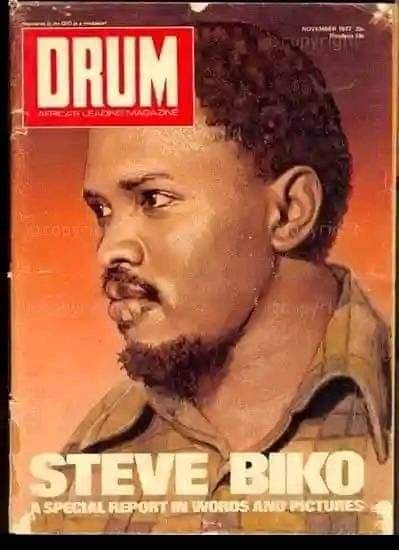
ABELUNGU KILLED BIKO

On this day 12 September in 1977, Steve Biko died, infact he was brutally murdered by white man South African anti-apartheid activist, Steve Biko died on this day while in police custody. Biko has been called the “anti-apartheid movement’s first icon”.

Well what Steve Biko preached was for Us to be Black and Proud, for our melanin skin to be our Crowns, for us to find beauty in our blackness and not only that, but for us to know that “Re Sechaba sa Rantsho” and “Ubumnyama bwethu ubuhle bendalo yethu” Ubuntu is our African Proverb. We are the children of the soil of Africa and Africa is the place of our birth ......

ABELUNGU KILLED BIKO not because Steve Biko was Anti-White but only because he saw the open window of white Supremacy. When Steve Biko quoted these words “ The most potent weapon for the  Oppressor is the mind of the oppressed“.

What he meant was that, Black people have been enslaved, prejudiced, stigmatized, condemned and made to believe that they are Incapable whereas they posses the ability to actually strive and maneuver the Manipulation as well as the oppression that has been instilled  by White Supremacy. Mental slavery is Real World and our people are swimming in it.

𝗡𝗚𝗢𝗭𝗜 𝗢𝗞𝗢𝗡𝗝𝗢-𝗜𝗪𝗘𝗔𝗟𝗔; 𝗧𝗵𝗲 𝗙𝗶𝗿𝘀𝘁 𝗪𝗼𝗺𝗮𝗻 𝗔𝗻𝗱 𝗙𝗶𝗿𝘀𝘁 𝗔𝗳𝗿𝗶𝗰𝗮𝗻 𝗧𝗼 𝗛𝗲𝗮𝗱 𝗧𝗵𝗲 𝗪𝗼𝗿𝗹𝗱 𝗧𝗿𝗮𝗱𝗲 𝗢𝗿𝗴𝗮𝗻𝗶𝘇𝗮𝘁𝗶𝗼𝗻 (𝗪𝗧𝗢)

𝗡𝗴𝗼𝘇𝗶 𝗢𝗸𝗼𝗻𝗷𝗼-𝗜𝘄𝗲𝗮𝗹𝗮, (born June 13, 1954, Ogwashi-Uku, Delta State, Nigeria), Nigerian-American economist who served as the seventh director general of the World Trade Organization (WTO) from 2021. She was the first woman and the first African to head the WTO.

She studied at Nigeria’s oldest girls’ secondary school and traveled to the U.S. to study at Harvard University as a teenager (1973). She graduated magna cum laude from Harvard with a bachelor’s in economics (1976) and later earned her Ph.D. from Massachusetts Institute of Technology (MIT) in 1981.

After receiving her doctoral degree, 𝗢𝗸𝗼𝗻𝗷𝗼-𝗜𝘄𝗲𝗮𝗹𝗮 served for twenty-five years in the World Bank where she rose to the number two position as managing director of operations. In that post, she supervised development projects and portfolios in Europe, Africa, Central Asia, and South Asia.

𝗢𝗸𝗼𝗻𝗷𝗼-𝗜𝘄𝗲𝗮𝗹𝗮 made history in Nigeria after being appointed the first woman and longest-serving Finance Minister of Nigeria. She was first appointed by President Olusegun Obasanjo (2003-2006) and again by President Goodluck Jonathan (2011-2015). She also served as Minister of Foreign Affairs between her two terms.

In 2005, she led negotiations with the Paris Club, an assembly of the world’s most developed nations, which led to the restructuring of 30 billion dollars of external debt owned by Nigeria as well as the outright cancellation of 18 billion dollars of debt.

𝗢𝗸𝗼𝗻𝗷𝗼-𝗜𝘄𝗲𝗮𝗹𝗮 is the seventh Director-General of the World Trade Organization. In her position, she is a spokesperson for the WTO and is instrumental in facilitating trade negotiations and settling disputes between member nations. Her term of office will end on August 31, 2025.

Tuesday, 12 September 2023

Did ancient Egypt come out of Sumerian or Mesopotamia? I don’t think so at all

When considering the advancements of ancient civilizations, Ancient Egypt and Sumer stand out as influential powerhouses. While both civilizations made significant contributions to human progress, Ancient Egypt possessed certain technological advantages that set it apart from Sumer. There are two key areas where Ancient Egypt excelled, providing a deeper understanding of the civilization's unique strengths.

Monumental Architecture:

Ancient Egypt's architectural achievements surpassed those of Sumer, particularly in the realm of monumental structures. The construction of grandiose edifices, such as the pyramids of Giza and the temples of Karnak and Luxor, showcased the Egyptians' extraordinary mastery of engineering and architecture. These colossal structures were not only impressive feats of design but also served as enduring symbols of the civilization's power, religious beliefs, and socio-political systems.

The meticulous planning and execution required to build these monumental structures, employing massive stone blocks and intricate design elements, demonstrated the advanced construction techniques of Ancient Egypt. The precision in aligning structures with astronomical phenomena, such as the orientation of the pyramids to celestial bodies, illustrates their understanding of mathematics and astronomy.

Funerary Practices and Mummification:

Ancient Egypt developed an intricate funerary culture and mummification practices that surpassed the mortuary traditions of Sumer. The Egyptians believed in the afterlife and invested significant resources into ensuring the preservation and protection of the deceased. Through the process of mummification, they perfected the art of preserving bodies, employing complex techniques to maintain the physical form for eternity.

The knowledge and expertise required for successful mummification procedures highlight the Egyptians' understanding of human anatomy, medicinal herbs, and chemical processes. These advancements in mortuary practices provided the foundation for an entire industry dedicated to the afterlife, including the creation of elaborate burial chambers, rich funerary offerings, and intricate tomb decorations. This focus on the afterlife shaped Egyptian society, influencing their religious beliefs, social structure, and artistic expressions.

Writing:

Ancient Egypt, with a population ranging from 1 million to 2 million people, far surpassed Sumer's population of 100,000 to 150,000. This stark contrast in population size necessitated a more complex administrative system, leading to the development of two distinct writing systems in Egypt. From the earliest times, Egypt employed the religious hieroglyphs for sacred texts and inscriptions, while simultaneously utilizing the administrative hieratic script for practical record-keeping and bureaucratic purposes. In contrast, Sumer, with its smaller population, relied on a single writing system for various societal functions.

Agricultural Innovations:

Ancient Egypt's agricultural advancements extended beyond crop cultivation. The Egyptians ingeniously harnessed the fertile soils of the Nile River through the construction of an elaborate irrigation system. By channeling and controlling the floodwaters, they were able to cultivate crops. The abundance of crops, including wheat, barley, flax, and various crops served as wages, ingredients for bread and beer production, and trade commodities. With a larger population, accurate astronomical observations were crucial to forecast the annual Nile River inundation, ensuring successful harvests and societal stability. This was dressed up in glitzy customs priests and the pharaoh had to perform on behalf of the nation.

Mathematics and Engineering:

Ancient Egypt made significant contributions to mathematics and engineering. Their skill in geometry is evident in the precise alignment and construction of their monuments. The Egyptians developed mathematical techniques for surveying and measuring land, which facilitated the accurate division of agricultural plots and the efficient use of resources. Due to a larger population they calculated volume in advance of building granaries for food and solved more practical problems that related to national security.

Medicine and Healthcare:

Ancient Egyptian civilization exhibited a remarkable understanding of medicine and healthcare. They possessed extensive knowledge of herbal remedies, anatomy, and surgery. Ancient Egyptian physicians utilized various medicinal plants and developed treatments for ailments and injuries. Their expertise in mummification techniques also reflects their advanced knowledge of human anatomy.

While both Ancient Egypt and Sumer made significant contributions to human civilization, Ancient Egypt possessed distinct technological advantages in monumental architecture, funerary practices, mathematics, engineering, healthcare, and medicine. The construction of monumental structures demonstrated their engineering prowess, while their mastery of mummification techniques showcased their understanding of human anatomy and chemistry. By recognizing these unique strengths, we gain a deeper appreciation for the exceptional achievements of Ancient Egypt and its lasting impact on human history.

When A Picture Says A Thousand Words

Late Burkina Faso 🇧🇫 President Captain Thomas Sankara's official Presidential car whilst he was in power.

During 4 years in power (1983-87), Thomas Sankara.

Built 350 schools, roads, railways without foreign aid.

Increased literacy rate by 60%.

Banned forced marriages.

Gave poor people land.

Vaccinated 2.5 million kids.

Planted 10 million trees.

Appointed females to high governmental positions, encouraged them to work, recruited them into the military, and granted pregnancy leave during his regime.

Sold off the government fleet of Mercedes cars and made the Renault 5 (the cheapest car sold in Burkina Faso at that time) the official service car of the ministers.

 He reduced the salaries of all public servants, including his own, and forbade the use of government chauffeurs and 1st class airline tickets.

As President, he lowered his salary to $450 a month and limited his possessions to a car, four bikes, three guitars, a fridge and a broken.

Rest on man of the people.

Ethiopian New Year 2016 🇪🇹 Happy New year!!!

Ethiopians follow a 13-month calendar similar to that used in many Eastern Orthodox churches, trailing the western calendar by seven years and eight months. On the Gregorian calendar, Ethiopian New year falls on the 11th September.

According to the bible, God created the earth in the month of September, and legend has it that King Solomon gave the Ethiopian Queen of Sheba jewels during a state visit over 3,000 years ago.

Upon her return, at the end of the dry summer season, yellow flowers began to bloom in the foothills surrounding Addis Ababa, signifying the end of a long drought and the start of new life within the country.

In honour of their former empress, the festival was named Enkutatash, meaning the ‘gift of the jewels’, a name it still bears to this day.

In September, the number of daylight and nighttime hours are the same, and this another reason why September is considered spiritually significant in the eyes of early Ethiopian Christians.

SUNGBO EREDO!

Sungbo Eredo is a very big historical sight in Yorùbá land. It extended from Òkè Eri to Ìjẹ̀bú òde to Ẹ̀pẹ̀. The person who said that Sugbo Eredo was built between 900 AD to 1000 AD lost their mind. Archaeology says that Bilikisu Sugbo aka Queen of Sheba tomb is 2,500 years old which means that it is very impossible for the Eredo city to be built in 500BC. The city was built before her death and that is why I added the Tower from Yemen that was formerly known as Shaba written as Sheba in the bible to this post. Africa ancestors started high rising building. Just like I learnt that our Ọ̀yọ́ ilé that was destroyed by Fulani was a big city with different architectural design. I added some Africa town Architecture to this post. We can see that when they colonised us, they change the structure of our building and they use the structure of our ancient architectural design to develop their own country.

I don't agree that Bilikisu sungbo was a Muslim. I am searching for the archaeology evidence from where I saved it that I will upload soon that show Shango worship a Kingdom of Shaba. Our people gave her the name Bilikisu from Koran and they taught that Arabic writing is from Islam. Arabaic writing is from Kingdom of Shaba before Prophet Mohammed was born. It was invented by great grandfather of Bilikisu sungbo according to the ancient Kingdom of Shaba history.

Our ancestors that we look down on actually started all civilisation. It is good for us to go back to the past so that we can be familiar with hidden truth. We lost everything to colonisation their religion we become slave to their myth. We can see in front of the door of the building from Togo where Totem were used for historical narration.

Monday, 11 September 2023

𝗪𝗵𝗼 𝗶𝘀 𝗢𝗹𝘂𝘆𝗲𝗺𝗶 𝗞𝗮𝘆𝗼𝗱𝗲?

𝗢𝗹𝘂𝘆𝗲𝗺𝗶 𝗞𝗮𝘆𝗼𝗱𝗲 was an athlete who specialised in sprints - 100 meters and 200 meters. The high point of his athletics career was at the 1992 Barcelona Olympic Games where he was part of the Nigerian 4×100 meters quartet that won a silver medal for Nigeria.

𝗞𝗮𝘆𝗼𝗱𝗲 was born to the family of Chief Balemo and Chief Alarierin, Oke-Ila Street, Ado Ekiti.

The quartet was made up of Davidson Ezinwa, Osmond Ezinwa, Olapade Adeniken and Oluyemi Kayode who came second behind the American quartet of Dennis Mitchel, Leroy Burrell, Michael Marsh and legendary Carl Lewis.

The feat of 𝗞𝗮𝘆𝗼𝗱𝗲 and other members of the relay team was celebrated all over the world as they went on to set a new African record in the 4×100 metres relay race.

Unfortunately, the sun set for US-based 𝗞𝗮𝘆𝗼𝗱𝗲, a native of Ado-Ekiti, when he died in an auto accident on October 1, 1994 on the 34th anniversary of his country’s independence in faraway Arizona, United States of America.

He was on his way to a venue where he and other Nigerians had scheduled to celebrate the 34th independence anniversary when another driver ran into his car, killing him in the process at the age of 26.

His remains were brought to his hometown by the Nigerian government on October 18, 1994 and he was buried amidst tears by Nigerians and many relatives and friends on October 19, 1994.

His mortal body was interred at Saint Andrew’s Anglican Church Cemetery, Oke-ila, Ado-Ekiti.

To immortalise him, the government named the then Ado-Ekiti sports stadium after him, hence, it became the Oluyemi Kayode Stadium.

- He represented Nigeria in the African Championship more than three times (between 1993-1994) and won Gold medals🥇in 100 and 200 metres.

- He was a member of the Nigerian relay team that won the won the silver🥈 medal prize for Nigeria at the 1992 Barcelona Olympic Games.

- He also participated in world competition between July and August 1994 in Canada and won Silver🥈and Gold🥇medals in 100 metres and 200 metres respectively.

Sunday, 10 September 2023

KWAME NKRUMAH

Nkrumah reacts upon receiving information that he had been overthrown.

His plane was still in the sky over China When he was overthrown in a CIA backed coup. He therefore, knew nothing about it.

At the Beijing Airport, was the Chinese Premier Zhou Enlai, standing in the cold wind, waiting to receive the Ghanaian leader.

Enlai had already received the news, and was not only worried how to break it to his guest but also how to receive and handle this diplomatic problem.

When Nkrumah's plane finally landed in Beijing, he was warmly recieved by Zhou Enlai who took him to state Guesthouse. After the guests and the host sat down in the reception room, the Chinese leader whispered to him that a coup had taken place in Ghana and showed him a message from the foreign news agency.

At first Nkrumah rejected this reality. But when he read the message, the reality slowly dawned on him. He bowed his head in his trembling hands but he was very calm.

As soon as the rumours were confirmed, the huge delegation made up of 90 Ghanaian officials, quickly disintegrated as they no longer wanted to be associated with a leader and a government that had been overthrown.

Even the Ghana embassy in Beijing also shifted it's position and announced its allegiance to the new military government.

Also with Nkrumah in Beijing was the Minister for Foreign Affairs who was quickly sent to Ghana to assess the situation.

But he too shifted his allegiance & expressed his support for the coup leaders immediately he arrived in Accra.

Nkrumah left Beijing for Guinea & never returned to Ghana. In Guinea President Sekou Toure gave him political asylum & made him co-President of the Republic of Guinea.

On April 27, 1972, Nkrumah died of an unspecified but apparently incurable illness in Bucharest, Romania where he had gone for treatment. It was a lonely death, far from his green and lovely native land and from his own people.

Shortly after Nkrumah’s death some squabbles erupted between president Sekou Toure of Guinea and Colonel Ignatius Acheampong the leader of Ghana military government which had come to power in another coup in January 1972.

Touré who had granted Nkrumah political asylum in his country wanted to bury Nkrumah in Guinea, while Colonel Acheampong desired that Nkrumah’s body be returned to Ghana where he said, the former President would be given a dignified burial.

Nkrumah’s mother, Madam Elizabeth Nyaniba, made an impassioned plea to President Toure to allow the body to be returned to Ghana: “I want to touch the body of my son before he is buried, or I die.”

Sékou Touré refused to release the body until he had extracted from the Ghanaians important concessions. And since the Romanians had sent the body to Guinea, Toure was in a strong position to dictate his terms of releasing Nkrumah’s body.

They were as follows:

(1.) NKRUMAH’S COMPLETE REHABILITATION IN THE EYES OF THE GHANAIAN PEOPLE (LIFTING ALL CHARGES THAT HAD BEEN PENDING AGAINST HIM).

(2.) THE RELEASE OF ALL OF NKRUMAH’S ALLIES STILL HELD IN GHANAIAN JAILS.

(3.) REMOVAL OF THE THREAT OF ARREST WHICH HUNG OVER ALL OF NKRUMAH’S FOLLOWERS WHO HAD CHOSEN TO REMAIN WITH HIM IN EXILE

(4.) AN OFFICIAL WELCOME BY THE GHANAIAN GOVERNMENT OF NKRUMAH’S REMAINS, WITH ALL THE HONORS DUE A DECEASED CHIEF OF STATE.

On May 20, 1972, it was revealed that Touré had imposed even further conditions on the Ghanaian government. He now insisted that Nkrumah’s tomb be placed in front of Ghana’s Parliament building, and that all of the men who had occupied ministerial appointments and high positions in his civil service be restored to their former posts.

Touré’s argument for holding the body was that he had granted Nkrumah asylum and made him co-President of Guinean Republic when he was “betrayed” by his own people who overthrew him. 

With the quarrel, attracting attention from the non-African press African leaders approached Toure to persuade him to release the body.

They were Presidents William Tolbert of Liberia, Siaka Stevens of Sierra Leone, and General Yakubu Gowon of Nigeria.

They argued that it was in the best interests of African dignity, and Africa’s image abroad, that the body be returned to Ghana.

Nkrumah’s body was eventually released by Toure and buried in Ghana.

How late Tafawa Balewa trekked for 400 kilometers when going to school between 1928 and 1933

When studying at Barewa College (1928-1933) , then known as Katsina College.

The College was several kilometers from Bauchi and was not close to a railway station nor other public transportation. During holidays, which was twice a year, Balewa trekked home, a journey of more than 400 kilometers. 

He trekked for 40 kilometers a day, before finding a resting place at a nearby village. In total, the journey took him 10 days.

NIGERIA

Before the advent of the Arabs and Europeans to Nigeria, the sophistication of the Nigerian Kingdom was very visible in their peculiar architecture. In a multicultural society like Nigeria, most of the kingdoms had a beautiful and unique architecture that reflected the climate, culture, and beliefs of the people.

The ingenuity of these buildings remains a marvel. Most of the buildings are usually made of mud and thatched roofs, which shows a careful thought in this style of building, the choice of materials is readily available and fits our tropical climate.

Some of the popular and noticeable architecture are the Hausa, Igbo and Yoruba – the three popular tribes.

The Hausa Architecture

A Traditional Hausa architecture is in form of a housing unit large enough to house the man his wives and the children, this housing structure forms part of an extensive walled city with a gate built into a tall of storey building. The traditional Hausa architecture can be categorised into three: calligraphy, surface design and ornamental. Some of such designs are still common and mostly found in the Emir palaces in various northern cities.

With the advent of Islam, there was a slight addition to the architectural plans of these places. An azure (a male section of the house) for example was later introduced to create seclusion of women and keep the women out from external contact with male visitors. Most Hausa architecture was made of simple materials such as mud, stones, grasses, corn stalks and straws for thatch roofing. The muds are made into tubali-sun-dried bricks, a mix of straw and mud is used to make concrete wall plastering. The entrance into the compounds is usually indoor arcs.

A typical Hausa architecture has various sections of a family compound: each having separate functions: Zanko-which is a protrusion from the rood parapet; The Dakuna (rooms) are built based on the number of wives the man of the house(mai gida) has; Daki Girki-the Kitchen; Rumfa-a shade, Shago-usually a place for a matured unmarried male, and Rijiya-a well at the centre of the house.

The Igbo Architecture

The Europeans had the most difficulty in breaking into the Igbo culture, the absence of a central ruling system made that possible, the Europeans had to convince various Heads of clans to gradually get into their culture as there was no single system of one King. This ruling system is depicted in the Igbo pre-colonial architecture. To the Igbo, home means more than just a building or a shelter, a compound building, or a place to return to after a day’s farming or work.

The traditional Igbo house structure was pre-dominantly round-wall mud houses (ulo aja oto) with thatched roofs (aju or atani). The roofing–a pitched roofing, was the commonest design found across the pre-colonial Igbo communities.

To build such, the skeletal framework of the roof is first weaved using bamboo poles or sliced bamboo poles. The bamboo is placed in slopes and then crossed with Palm fronds. To give a formidable roofing structure that can avert incidence such as wind, at various points rafters are knotted or tied The last process is thatching, the skeletal structure is covered with grasses and fronds (raffia mat). Most of these houses had no concrete beams due to the materials available at that time, most used woods and bamboos as a support system or beams.

The family unit a very important unit in Igbo style of government, the architecture of a family compound is simple and headed by an Okpara. An Okpara is usually a titled elder. Most Igbo architecture was built-in for tight encasement which came from their forefather or ancestors who were cave dwellers, the cave provided shelter, warmth and home. The family compound which consisted of a single entrance and exit covered with raffia mats has; Ute/Azani–thatching which is done with grasses and fronds , meeting house (Obi), shrines (Okwu-Alusi) and many rooms (ime ulo) that can accommodate the polygamous family system practised then.

The most important part of the house was the obi, or meeting house. In Chinua Achebe’s Things Fall Apart, the protagonist Okonkwo had an Obi where he meets his fellow kinsmen. The Obi was the symbolic centre of the compound, where the head of the family kept his altars and where he entertained his guests. The other rooms were shared among the wives and children. Like in the Hausa style of building, the men’s section is also separated from the women, and the children section is grouped. The men visit the women room in turns when it’s time for copulation.

The Yoruba 

They had a large courtyard with a housing style typically called the ‘Orowa.’ These houses were usually a continuous building making up of extended families. The large courtyards were the most important elements in the traditional Yoruba house setting. The building of houses was mostly communal effort using readily available material such as thick mud walls, bamboo rafters or other termite-resistant timber sheets instead of thatch, and a sand plaster to mud walls. The houses extend into large family compounds with several rooms and a group of Courtyard. These are known as agbo’le and are often called by the name of the first head of the family. For example, Agbo’le Adebayo. Every household member is careful in what they do so as not to tarnish the name of the family compound. The rooms had standard units of measurement mostly 10 ft (ese bata mewa). In the courtyard, activities such as cooking, livestock rearing and a store to house the farm implements are a common sight.

 Photos:

A. Yoruba

B. Igbo

C. Hausa

Saturday, 9 September 2023

The Social Structure of the Solomonic Dynasty, Ethiopia

 - Head of State and Governance: The head of state was the Emperor (Negusa Nagast), who held significant powers, including being considered a direct descendant of King Solomon and Queen Sheba, an Elect of God, and King of Kings. The Emperor had absolute power over subjects. Succession was often based on a system of primogeniture or appointment by the reigning Emperor. New laws were generally created through decrees issued by the Emperor.

- Social Division: Society was divided into various social classes, with the Emperor at the top, followed by nobles, officials, clergy, and commoners. The hierarchical structure was also influenced by regional and religious affiliations.

- Polygyny: Marrying more than one wife was practiced by nobles and the Emperor, often for political alliances and to consolidate power.

- Lineage: The society was primarily patrilineal, with lineage and ancestry tracing through the male line.

- Religious Beliefs: The main religious beliefs were rooted in Ethiopian Orthodox Christianity. The role of ancestors was significant, and religious leaders, including high priests, played a central role in spiritual matters. An ethical system was based on religious teachings. Conversion efforts were not widespread.

- Rite of Passage: The transition from childhood to adulthood was marked by religious ceremonies and education within the church.

- Code of Conduct: The Ethiopian Orthodox Church provided a moral framework for society, emphasizing virtues, ethical behavior, and adherence to religious teachings.

- Oral Tradition: Oral tradition was vital for transmitting history, cultural values, and religious teachings.

- Taxation and Governance: Taxation was collected through local and regional administrators. Client states and alliances sometimes contributed resources to the central government.

- Justice System: The justice system often involved traditional practices and ecclesiastical courts, where religious leaders played a role in dispensing justice.

- Education System: Education was closely tied to religious institutions, with monasteries and churches serving as centers of learning.

- Healthcare System: Healthcare was provided through traditional herbal remedies and practices, often intertwined with religious beliefs.

- Art and Craft: The dynasty supported various artistic and craft industries, including religious art, manuscripts, textiles, and architecture.

- Diplomacy: Diplomacy involved alliances, treaties, and embassies with neighboring kingdoms and foreign powers.

- Military System: The military was organized around the Emperor's authority and comprised professional soldiers and conscripted forces. Defensive and expansionist strategies were employed over time.

- Land Tenure: Land ownership was often tied to nobility and the church, with public and private ownership.

- Food Production: Agriculture was the primary source of food production, supplemented by pastoralism, fishing, and hunting and gathering in different regions.

- Medical System: Medical practices were rooted in traditional herbal remedies and spiritual beliefs.

- Music Industry: Music was an integral part of religious and cultural ceremonies, often accompanied by traditional instruments.

- Performing Arts: Performing arts were intertwined with religious rituals, storytelling, and cultural celebrations.

- Record-Keeping: Record-keeping was often done through manuscripts and written texts in Ge'ez script.

- DNA Testing: DNA testing has been performed on modern populations, revealing insights into genetic ancestry and historical migration patterns.

- Linguistic Analysis: Linguistic analysis of modern populations has provided insights into language evolution and cultural connections.

- Excavations: Archaeological excavations have uncovered artifacts, structures, and tombs, shedding light on historical practices and societal structures.

Also please do your own research. Tell me if you think I missed anything.

Related Posts Plugin for WordPress, Blogger...